
Aggregator delivery platforms solved a real problem: they put your menu in front of people who’d never have found you otherwise, and they built the delivery fleet so you didn’t have to. That’s genuinely valuable. It’s also expensive, and the commission percentage on the invoice is only part of what it costs you. This article works through the full math of what an aggregator order actually nets you, when the channel makes sense, and what direct ordering changes.
We won’t quote specific commission percentages here, they vary by platform, market, and contract, and they change. What matters is the method: plug in your own numbers and you’ll see your own answer.
What’s actually on the invoice, and what isn’t
The commission is the headline number, and it’s real. But three more things quietly eat into what an aggregator order nets you:
1. The commission itself, taken as a percentage of the order total, sometimes with a different rate for delivery versus pickup orders placed through the same app.
2. Packaging that’s more expensive than in-house. Delivery needs sturdier, spill-proof, presentable packaging. That’s a real per-order cost that a dine-in ticket doesn’t carry.
3. Menu compression. Not every dish travels. A steak that’s perfect at the table can arrive soggy or cold after 25 minutes in a bag. Restaurants routinely simplify or reformulate their delivery menu, which sometimes means a lower average ticket on that channel than in the dining room.
4. Discovery pricing. Platforms often push participation in promotions (a discount, free delivery) to stay visible in their app’s search and rankings. That’s a marketing cost, real, but easy to miss when you’re only looking at the commission line.
Put together, the net margin on a delivery order can be meaningfully lower than the same dish sold at the table, even before you count the extra kitchen throughput it demands during a rush.
The break-even math
Here’s the useful exercise, run it with your own numbers:
Net from aggregator order = order value
  − (commission % × order value)
  − packaging cost
  − any promotional discount

Net from direct order (your own online ordering, 0% platform commission) = order value
  − payment processing fee (typically far lower than aggregator commission)
  − packaging cost
The gap between those two lines is what the aggregator’s discovery and delivery fleet are actually costing you per order. For a restaurant doing meaningful delivery volume, that gap adds up to a real number every month, one worth knowing exactly rather than sensing vaguely.
That doesn’t mean drop the aggregators. It means know your number, and use it to decide which orders you want on which channel.
Where aggregators genuinely earn their cut
The honest case for keeping them: discovery. A new customer who’s never heard of you, searching “pizza near me” at 9pm, finds you through the platform and would not have found you otherwise. That first order is marketing, and marketing has a cost. If the aggregator brings you a customer who becomes a repeat one, direct or through the app, the commission on that first order was money well spent.
The trap is treating every order, including the regular who orders from you every Friday, as if it still needed that discovery cost. A customer who already knows your name doesn’t need to be found. They need a reason to order direct.
Making direct ordering the default for people who already know you
This is the practical lever most restaurants under-use. If you have your own ordering (QR at the table, a link in your Instagram bio, your own site), a repeat customer ordering through it instead of the aggregator saves you the commission on every single order they place from then on, for as long as they keep ordering.
A few things make that switch actually happen, rather than staying a wish:
- Make direct ordering as easy as the app. If it takes longer or looks worse than the aggregator’s app, nobody switches, no matter what you tell them.
- Give repeat customers a reason: a small loyalty perk, slightly better pricing, faster order-ahead pickup, something the aggregator app can’t offer them.
- Put the QR code and the link everywhere a customer already is: the receipt, the table, your social bio, a card in the takeout bag.
None of this requires walking away from the aggregators. It requires making sure the customers who already know you aren’t paying the discovery tax forever.
The kitchen-side cost nobody puts on the invoice
One more thing worth naming: delivery orders during a dine-in rush compete for the same kitchen capacity as your tables. If the same station is firing dine-in tickets and delivery bags with no visibility into which is which, delivery times slip, dine-in times slip, and both suffer. A kitchen display that clearly separates and times each channel isn’t about the commission line, it’s about protecting throughput on your busiest hours, which is where the real margin lives.
What to actually do with this
- Run your own break-even math per platform, per order type. Commission rates and packaging costs are on your invoices already; pull them together once and you have a real number, not a feeling.
- Segment new versus repeat. Discovery cost is worth paying for a new customer. It’s a leak for someone who already has your number saved.
- Make direct ordering genuinely easy: not an afterthought link nobody finds.
- Watch kitchen throughput by channel: not just revenue by channel; a busy delivery hour that slows down your dining room isn’t free even when the commission math looks fine.
Where Galadier fits
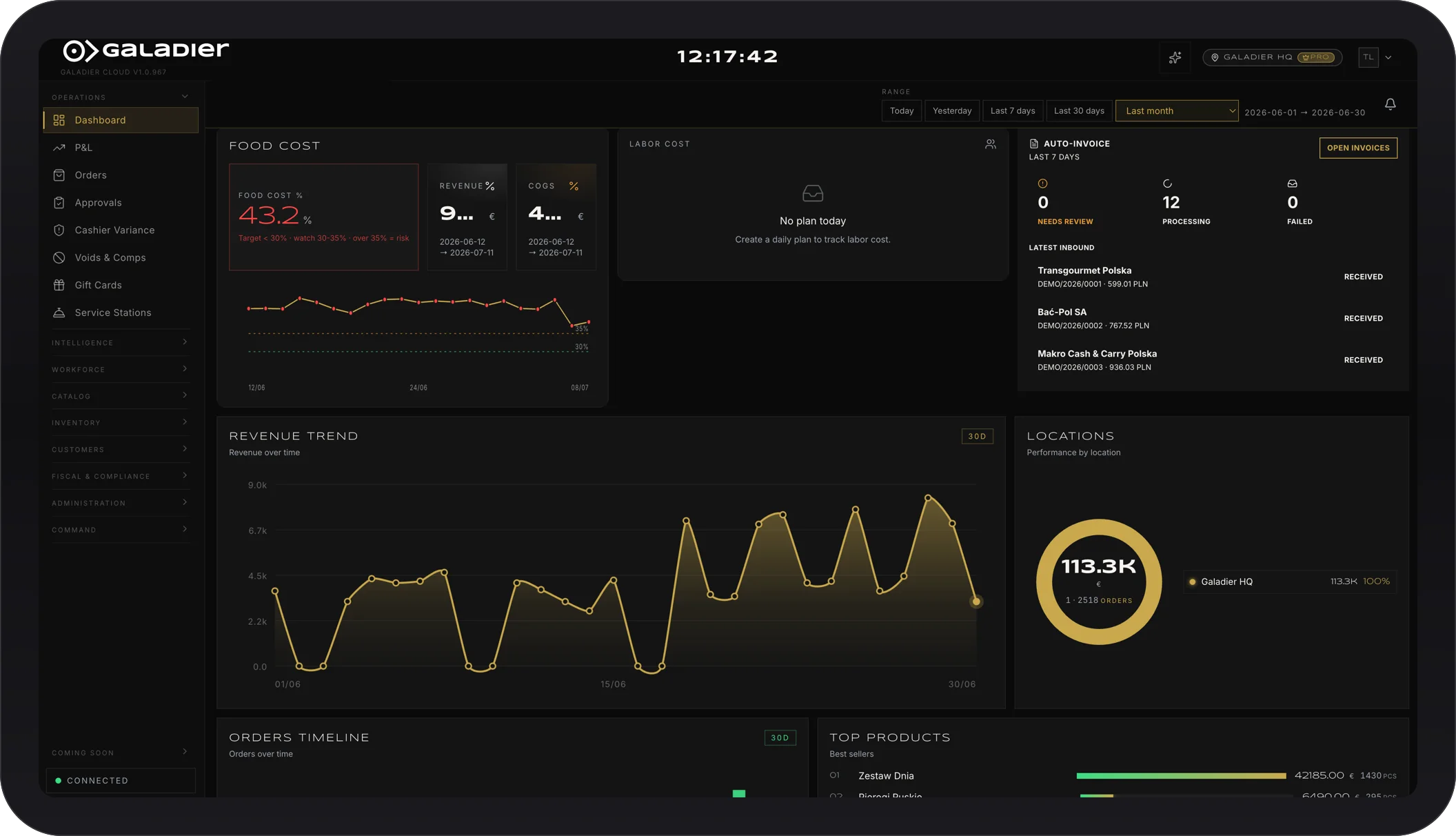
Galadier gives you your own direct ordering (QR, online) at 0% commission, alongside the reporting that shows delivery, dine-in, and pickup revenue and margin side by side, so the break-even math above isn’t a spreadsheet exercise, it’s a number already on your screen. The kitchen display separates orders by channel so a busy delivery hour doesn’t quietly slow down your dining room.
See how direct ordering and channel reporting work on the features page, or book a demo with your own delivery numbers and we’ll run the break-even math together.