
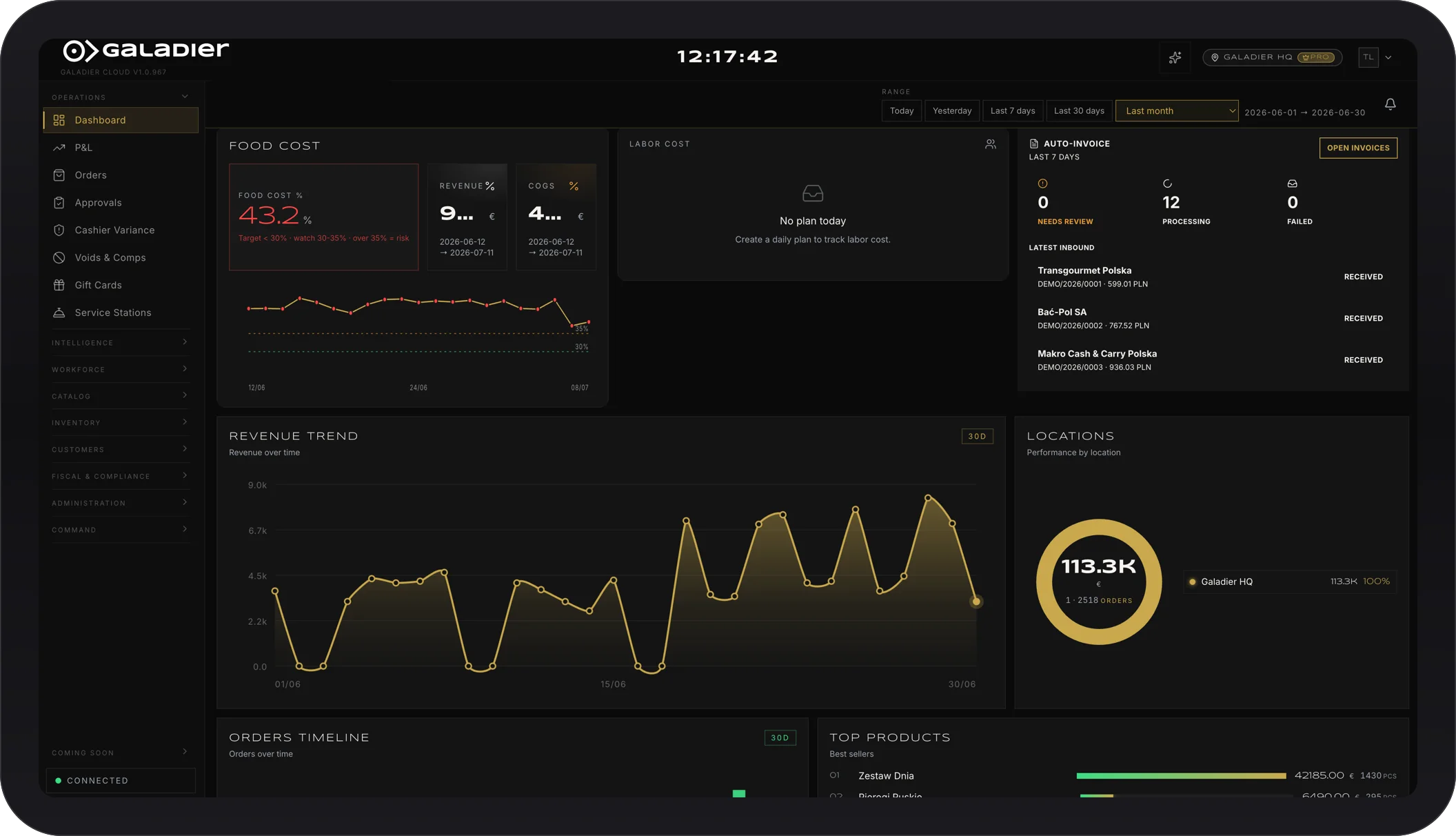
Food cost comes down through four levers: the right menu price, consistent portions, less waste and tighter control of what you pay suppliers. If you do only one thing this week, weigh the portions of your five best-selling dishes, because that is usually where the biggest leak hides.
Before any of this you need a starting number. If you have not costed your dishes yet, start with the restaurant food cost formula and come back here.
1. Cost your 10 best-selling dishes
You do not need to cost the whole menu on day one. In most restaurants a handful of dishes bring in most of the revenue. Pull last month’s sales, keep the top ten and write down for each: ingredients, grams, purchase price, net selling price. Those ten will tell you where to look.
2. Lock down portions
A portion that drifts is the quietest way to lose money. Ten extra grams of cheese or meat per plate, across hundreds of plates a month, is margin gone.
- Put a scale at the pass and set gram targets for the main components.
- Use ladles and scoops with a known volume.
- Print a spec card with a photo of how each plate should leave the kitchen.
- Spot-check two plates per shift for a month. After that it becomes habit.
3. Log waste, every shift
What is not measured does not shrink. A simple waste sheet next to the bin (item, quantity, reason) is enough to spot patterns within two weeks: the fish left over every Monday, the sauce made in batches that are too big, the bread binned every night.
Split it into three buckets: prep waste (trimming, cutting), spoilage (anything that went off) and returns from the floor (wrong orders, complaints). Each one is fixed differently.
4. Order to the forecast, not to habit
Over-ordering fills the fridge and then the bin. Order for what you expect to sell over the next few days: day of the week, bookings, weather, local events. For perishables, smaller and more frequent deliveries almost always cost less than one big one.
5. Watch supplier prices
Prices rarely jump. They creep, on one item, on one invoice nobody compares with the last one. Three habits help:
- Compare every invoice with the previous price for your 15 to 20 key ingredients.
- Get a quote from a second supplier every six months, even if you do not plan to switch.
- Check weight and quality on delivery, not later.
6. Engineer the menu around margin
Not every dish earns the same. Plot dishes on two axes: how much they sell and how much they leave per plate. Popular dishes with good margin get the best spot on the menu. Popular dishes with thin margin get worked on (portion, side, price). Dishes that neither sell nor earn come off.
7. Use each ingredient in more than one dish
Every ingredient that lives in only one dish is a waste candidate. Trim from prep can become stock, a daily special or a side. A tighter menu with overlapping ingredients is almost always more profitable than a long one.
8. Compare theoretical and actual food cost every month
Theoretical food cost tells you what food should cost based on your recipes. Actual food cost comes from purchases and stock. The gap between them is the loss you cannot see: waste, mistakes, comps that never got rung up. When the gap widens, you know something changed long before year-end.
How Galadier helps
With Galadier you see the cost and margin of every dish live, with no spreadsheet. When an ingredient’s price goes up, you see which dishes it hits the same day, and when something in your costs drifts out of the ordinary, you hear about it without digging. See what Galadier Intelligence does and all features, or talk to us to see it on your own menu.